How to Choose the Right Escalator for Your Building
By Admin | 09 Jul, 2026
How to Choose the Right Escalator for Your Building
Escalators are a fundamental part of vertical transportation in many modern buildings. From shopping malls and airports to office buildings and public transportation stations, escalators offer a fast and efficient way for people to move between levels. Choosing the right escalator for your building is essential to ensure safe, efficient, and comfortable movement for your occupants.
Selecting the ideal escalator involves several factors, including traffic volume, building layout, maintenance needs, and compliance with safety regulations. This guide explores the key considerations you should take into account when choosing an escalator for your building.
1. Understand Your Traffic Requirements
One of the most important aspects of choosing an escalator is understanding your building's traffic volume. An escalator’s capacity is determined by factors such as its speed, width, and motor power. Too small of an escalator for high traffic can cause congestion and delays, while too large of an escalator for low traffic may be an unnecessary expense.
Factors to Consider:
- Peak traffic times: Understand the times of day when foot traffic is heaviest, such as during lunchtime in office buildings or during weekends in shopping malls.
- Passenger volume: Estimate the number of people who will use the escalator each day. Larger, busier facilities like airports and malls will need larger, more robust escalators.
Key Tip: Work with your elevator and escalator provider to assess foot traffic and choose the right escalator size and speed to meet your needs.
2. Consider the Location and Layout of Your Building
The location of the escalator is essential to ensure that it provides the most efficient route for users. Whether your building has an open floor plan or multiple levels with narrow corridors, the placement of your escalator will affect the building’s flow and efficiency.
Factors to Consider:
- Placement: Decide where the escalator will be placed in relation to high-traffic areas such as entrances, exits, and key sections of the building.
- Space constraints: Consider the available space for installation. Some escalators are designed to fit into tight spaces, while others may require more room.
Key Tip: Always ensure that the location of the escalator will not obstruct pedestrian pathways or emergency exits, as this can create hazards during an emergency.
3. Choose the Right Escalator Size
Escalators come in various sizes, and choosing the right size is essential to accommodate your building’s needs. The size of an escalator is typically determined by its width, step height, and step tread depth.
- Width: The width of the escalator will determine how many people can use it at once. Larger buildings or high-traffic areas require wider escalators to handle more people at a time.
- Step height and tread depth: These are essential for ensuring passenger comfort. The step height should be uniform and designed to minimize the risk of tripping, while the tread depth provides adequate support for each step.
Key Tip: For commercial settings like shopping malls or airports, opt for wider escalators to accommodate larger volumes of people. Smaller or less busy buildings may be able to function with narrower escalators.
4. Speed and Power of the Escalator
The speed of the escalator is another critical factor. It’s important to choose an escalator that moves at an appropriate speed for the traffic in your building. Generally, escalators move at speeds between 0.3 to 0.75 meters per second, depending on the environment.
- Faster speeds are suitable for areas with high traffic, such as airports or train stations, where people are constantly moving between levels and need to reach their destination quickly.
- Slower speeds are typically used in places like shopping malls or office buildings, where passengers may be more relaxed.
Key Tip: Adjust the speed based on the purpose of the building. High-speed escalators are suitable for fast-paced environments, while slower speeds are better for places with leisurely traffic.
5. Maintenance and Durability
The durability and maintenance of your escalator are crucial for long-term functionality and safety. Look for escalators made from high-quality materials, with a design that ensures long-term reliability and ease of maintenance. Proper maintenance is essential to keep the escalator running smoothly and ensure that it continues to meet safety standards.
Factors to Consider:
- Maintenance schedule: Ensure that the escalator can be serviced regularly without disrupting traffic. Escalator manufacturers should provide clear guidelines for routine maintenance tasks such as lubrication, cleaning, and inspection.
- Durability of materials: Choose escalators made from rust-resistant materials, durable motors, and high-quality steps to prevent wear and tear.
Key Tip: Invest in escalators that come with long-term warranties and service agreements to minimize unexpected repair costs.
6. Safety Features and Compliance
Safety is paramount when it comes to escalators, as they can pose significant risks if not properly maintained or used. Modern escalators are designed with a variety of safety features to protect passengers from accidents.
Key Safety Features to Consider:
- Handrails: Handrails should be positioned at a comfortable height for users to hold onto while riding the escalator.
- Step edge lighting: LED lighting on the edges of each step can help users see the steps clearly, particularly in low-light conditions.
- Emergency stop buttons: Escalators should be equipped with emergency stop buttons at the top and bottom, in case of an emergency.
- Safety sensors: Many escalators have sensors that detect obstructions or irregularities and stop the escalator to prevent accidents.
Key Tip: Make sure the escalator meets local building codes and safety regulations, and has all the necessary safety features, including handrails, lighting, and sensors.
7. Aesthetic Design and Branding
In addition to functionality, the aesthetics of your escalator can also play a role in your building’s overall design. For businesses such as shopping malls, airports, or hotels, having a visually appealing escalator that matches the building’s aesthetic can enhance the customer experience.
Factors to Consider:
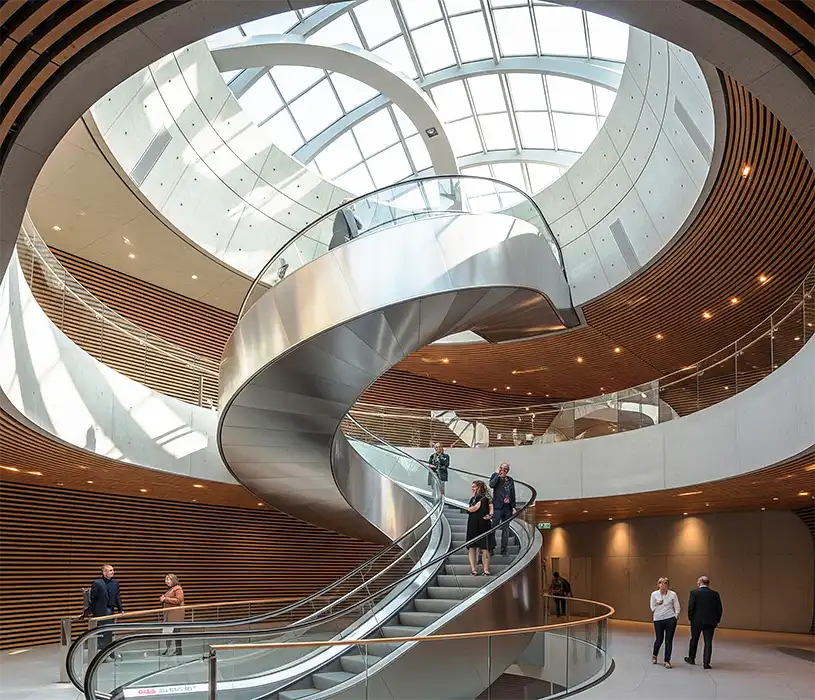
- Finish and design: Choose an escalator with a finish that matches your building's interior decor. Options include stainless steel, brushed metal, and glass designs.
- Customization options: Some escalator models offer customizable elements such as illuminated handrails or branded step treads.
Key Tip: While aesthetics are important, ensure that the chosen design does not compromise functionality or safety.
8. Energy Efficiency
In today’s world, energy efficiency is a major consideration for any building manager or owner. Escalators consume a significant amount of power, so opting for energy-efficient models can help lower operational costs in the long run.
Key Considerations:
- Energy-saving technology: Look for escalators that incorporate energy-saving technologies such as standby mode, which reduces power usage when the escalator is not in operation.
- Low-energy motors: These motors consume less electricity and are designed to work efficiently even in high-traffic conditions.
Key Tip: Choose escalators with energy-efficient features to reduce your building's carbon footprint and operating costs.
Selecting the right escalator for your building is crucial to ensure safe, efficient, and comfortable transportation for passengers. By considering factors such as traffic volume, building layout, maintenance needs, safety features, and aesthetics, you can choose an escalator that meets the needs of your building while also providing long-term value. Whether for a high-traffic commercial center, a transportation hub, or a residential complex, the right escalator can significantly enhance the functionality and appeal of your space.