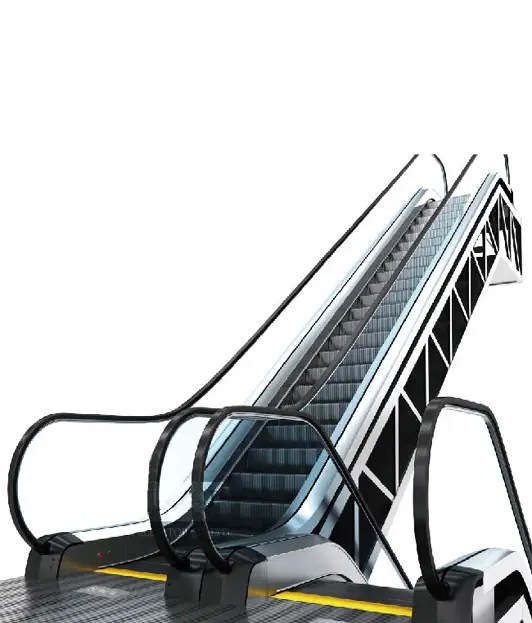
Escalator Supplier for Shopping Malls & Metro Stations
Revolutionizing Vertical Transportation in Modern Infrastructure
The UrbanFlow Pro Escalator Series redefines efficient vertical transportation for high-rise buildings, commercial buildings, transit hubs, and luxury residential buildings. Engineered with precision elevator components like regenerative drive systems and IoT sensors, these escalators transport people safely while slashing energy consumption by up to 45% compared to conventional models. Designed to handle extreme crowds in airports, shopping malls, and skyscrapers, they merge brute strength with adaptive intelligence.
Technical Specifications
| Feature |
UrbanFlow Pro 60 |
UrbanFlow Pro 90 |
| Weight Capacity |
6,000 kg (dynamic) |
8,500 kg (dynamic) |
| People Flow Rate |
10,000/hour |
12,000/hour |
| Energy Consumption |
3.5 kW (avg) |
4.2 kW (avg) |
| Speed |
0.5 m/s |
0.75 m/s |
| Rise Height |
Up to 18m (6 floors) |
Up to 25m (8 floors) |
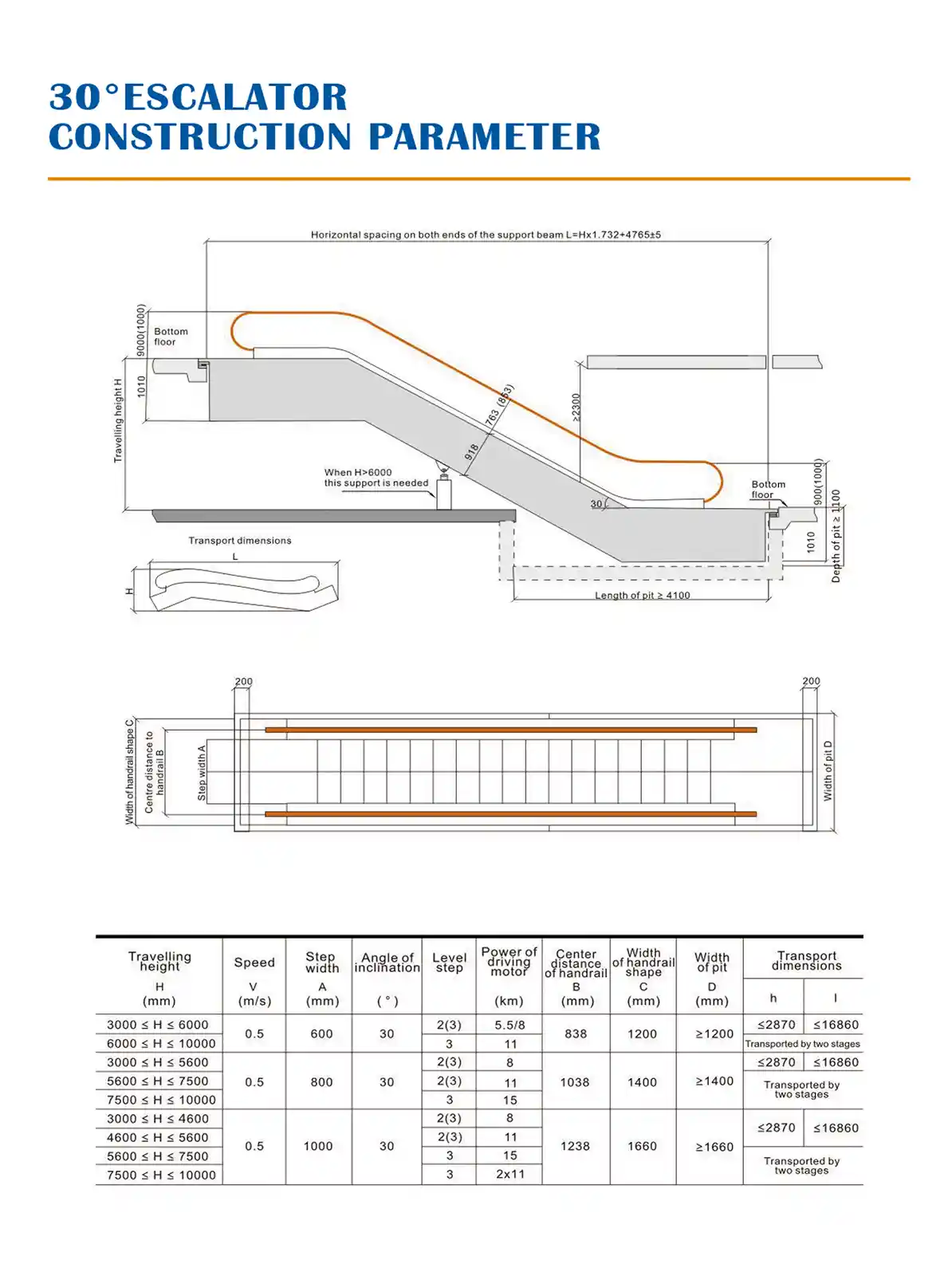
Drawings & Parameters:
Core Engineering Innovations
-
Energy-Smart Vertical Transport
Regenerative drives feed 30% of braking energy back into the building grid.
Sleep mode reduces power draw to 0.4 kW during inactivity.
-
Elevator-Grade Durability
Reinforced step chains (20% stronger than ISO standards)
Aircraft-grade aluminum comb plates
-
AI People Flow Optimization
Real-time camera analytics adjust speed to prevent congestion
Predictive maintenance alerts for motors, gears, and safety systems
Applications Across Building Types
-
Commercial Buildings
Shopping malls, hospitals, and corporate plazas requiring high-volume vertical transportation.
-
High-Rise Buildings
Skyscraper atriums and transit connectors moving 15,000+ people daily.
-
Public Infrastructure
Airports (e.g., 24/7 operation with 99.8% uptime) and stadiums.
-
Residential Complexes
Luxury towers with integrated retail zones (1,200mm step width for comfort).
Model Spotlight: Pro 90X
-
Weight Capacity: 8,500 kg (supports 140 passengers)
-
Energy Recovery: 35% via hybrid drive systems
-
Key Features:
-
Antimicrobial handrails with UV-C sterilization
-
Touchless entry (facial recognition/mobile app)
-
Carbon-neutral manufacturing (85% recycled steel)
-
Compliance:
Exceeds EN 115 / ASME A17.1 safety standards
Sustainability & ROI
-
Energy Consumption: 45% less than hydraulic escalators
-
Carbon Reduction: 12 tons/year per unit
-
ROI Timeline: 3-5 years via:
Q/A: Escalator Industry Insights
Q1: How do escalators handle extreme weight capacity in high-traffic areas?
*A1: Heavy-duty models like the UrbanFlow Pro 90X use load-bearing trusses and dual-chain drive systems. Sensors dynamically redistribute weight across steps—halting operation if exceeding 8,500kg.*
Q2: Can escalators replace elevators in high-rise buildings?
*A2: For ≤6-floor vertical transportation, yes. Beyond 8 floors, elevators are faster. Hybrid "sky lobby" designs use escalators for podium levels + elevators for upper floors.*
Q3: Why are elevator components used in escalators?
A3: Industrial brakes, motors, and control systems (shared with elevators) ensure reliability. Regenerative drives—originally for elevator cars—cut energy consumption 30% in escalators.
Q4: Are escalators viable for residential buildings?
*A4: Only luxury complexes with retail spaces. Requires low-noise models (≤50 dB) and 24/7 maintenance—costing 40% more than commercial installations.*
Q5: How do smart escalators reduce energy consumption?
A5: AI slows steps during low traffic (saving 65% power). Regenerative drives capture braking energy. LED lighting uses 85% less power than halogens.