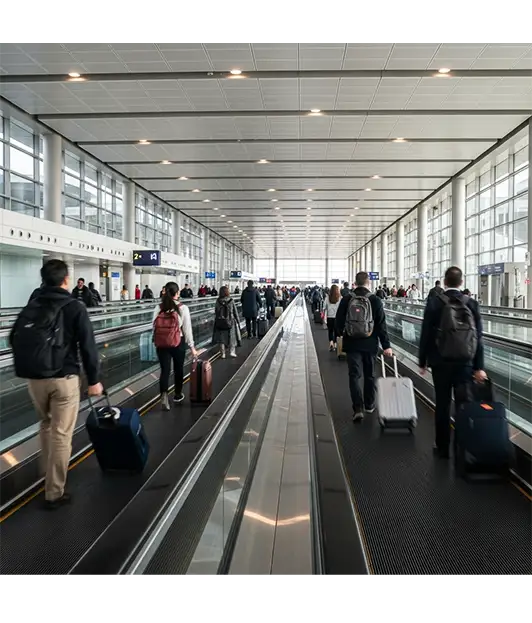
Moving Walkway Travelator for Airports, Metro & Retail
✅ Safety & Compliance
Our moving walkways are compliant with the most stringent international safety standards. Standard features include:
-
Pallet anti-slip surfacing
-
Emergency stop buttons
-
Skirt deflector brushes
-
Step gap lighting
-
Handrail speed synchronizers
-
Audible alerts at entry/exit
🧠 Design Flexibility
Modern projects demand design harmony. Our walkways offer customizable aesthetics including:
-
Brushed stainless-steel finish
-
LED under-lighting or glass balustrades
-
Etched logo handrails
-
Voice prompts for exits
-
Integrated advertising display options
🏢 Industries Served
-
Airports – passenger terminals & shuttle zones
-
Metro stations – platform-to-exit access
-
Shopping malls – food courts, upper/lower decks
-
Hospitals – aiding patient & staff movement
-
Residential buildings – senior living, large condominiums
-
Convention centers – fast movement over long halls
🔧 Installation, Operation & Maintenance
We offer full-service installation with structural assessment, site-specific customization, and full after-sale support. Remote monitoring and diagnostics ensure 24/7 uptime. Optional features include:
💡 Why Choose Our Moving Walkways?
-
Smooth and safe horizontal vertical transportation
-
Designed for high-load weight capacity environments
-
Energy-efficient systems for low energy consumption
-
Compliance with international elevator & escalator standards
-
Custom design and easy integration with existing architecture
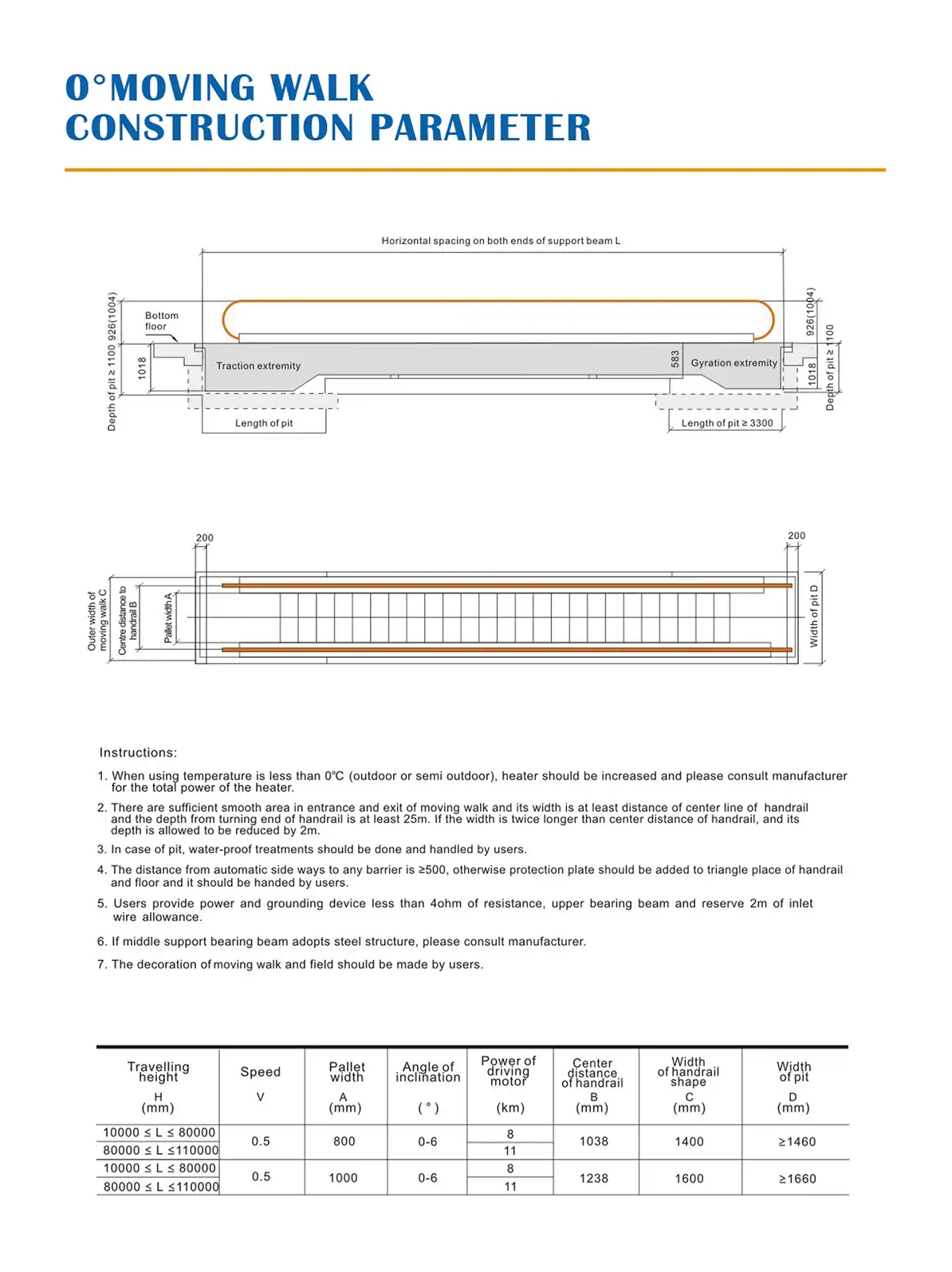
Layout Drawings:
❓Q/A – Elevator & Walkway Industry FAQs
Q1: What is a moving walkway used for?
A: It provides effortless horizontal or inclined transportation in public spaces, reducing walking strain and speeding up transit in large buildings.
Q2: How is a moving walkway different from an escalator?
A: Escalators move vertically between floors. Walkways transport people horizontally or at a gentle incline, usually in areas with long walking distances.
Q3: Where can I install a moving walkway?
A: Airports, malls, residential complexes, hospitals, and transit hubs. Indoor and outdoor options are available based on your project's need.
Q4: Is the energy consumption of a travelator high?
A: No. Modern walkways use energy-saving drives and auto-stop features to minimize power use, making them ideal for energy-conscious environments.
Q5: What is the standard speed of a moving walkway?
A: Typically 0.5 m/s, adjustable up to 0.75 m/s in some models. The speed is designed for balance between comfort and transit efficiency.